
Leather Sectional Sleeper Sofa: The Complete Buying & Style Guide
Everything you need to know before investing in a leather sectional sleeper sofa — from leather grades and frame construction to mattress types, sizing, and living room styling.
START THE GUIDEWhy a leather sectional sleeper sofa? It combines the spacious seating of an L-shaped sectional with the durability and easy maintenance of leather upholstery — plus a built-in bed for overnight guests. For households that host frequently and want a furniture piece that ages gracefully, it is one of the most practical investments you can make. This guide walks you through every decision point so you can buy with confidence.
What Exactly Is a Leather Sectional Sleeper Sofa?
A leather sectional sleeper sofa is a multi-piece seating unit configured in an L-shape or U-shape, upholstered in leather or a leather blend, with a hidden conversion mechanism that transforms part of the seating into a bed. Unlike a standard sectional sleeper sofa, the leather version offers superior stain resistance and a more premium look that develops a natural patina over time. If you are still deciding between configurations, our comparison of sectional vs standard sleeper sofa breaks down the trade-offs clearly.
Most models place the sleeper mechanism in one section — typically the chaise or a dedicated sofa segment — while the remaining sections stay as fixed seating. This means you get a full living room layout and a guest bed in a single footprint, which is especially valuable in open-plan homes. For a deeper look at the leather side of the equation, see our dedicated leather sleeper sofa guide.
Why Choose Leather Over Fabric for a Sectional Sleeper?
Leather is not just an aesthetic choice — it changes how you live with the furniture. Spills bead up instead of soaking in, pet hair wipes away with a damp cloth, and the surface does not trap odors the way woven fabric can. For a piece that doubles as a bed, this matters: guests notice a fresh, clean sleeping surface. The trade-off is upfront cost and temperature feel. Here is an honest breakdown:
Advantages of Leather
- Highly stain and spill resistant
- Easy to wipe clean — ideal for kids and pets
- Does not absorb odors or allergens
- Develops a rich patina with age
- Outlasts most fabric upholstery
- Elevated, premium appearance
Trade-Offs to Consider
- Higher upfront cost than fabric
- Feels cold in winter, sticky in summer
- Can crack if neglected or dried out
- Heavier and harder to move
- Repairs are more visible than fabric patches
Leather Types Explained: Full-Grain, Top-Grain, Bonded & Faux
The word "leather" on a product listing can mean very different things. Knowing the grade tells you how the sofa will age, how it feels, and whether the price is fair. This is the single most important specification to verify before buying a leather sectional sleeper sofa.
| Leather Type | Durability | Feel | Price Range | Best For |
|---|---|---|---|---|
| Full-Grain | Excellent (20+ yrs) | Natural, develops patina | $2,500+ | Luxury, long-term investment |
| Top-Grain | Very Good (10–15 yrs) | Smooth, consistent | $1,500–$3,000 | Best balance of quality & value |
| Split-Grain | Good (7–10 yrs) | Firmer, less supple | $1,000–$2,000 | Budget-conscious buyers |
| Bonded Leather | Fair (3–5 yrs) | Uniform, can peel | $600–$1,200 | Rental units, light use |
| Faux / PU Leather | Fair (3–6 yrs) | Very uniform, synthetic | $500–$1,500 | Vegan households, tight budgets |
If genuine leather is outside your budget, a quality faux leather sleeper sofa can still deliver the look and easy-clean benefit for several years. Just set realistic expectations about longevity. For a warmer, more traditional leather tone, a brown leather sleeper sofa remains the most popular and forgiving color choice.
Sectional Configurations: L-Shape, Chaise & Storage Options
Not all sectionals fold out the same way. The configuration you choose determines how the bed deploys, how much floor space you need, and how the room functions day to day.
L-shaped with pull-out: The most common design. One arm section contains a fold-out mattress, while the chaise or return section stays fixed. This is the classic L-shaped sleeper sofa layout and works well in most living rooms.
Sectional with chaise sleeper: The chaise itself converts, which is convenient for smaller rooms because the bed footprint stays compact. Explore sectional sleeper sofa with chaise options if you want a lounge piece that doubles as the guest bed.
Sectional with storage: A built-in compartment under the chaise holds bedding, pillows, or the mattress itself. This is a major convenience for guest rooms and small apartments — see sectional sleeper sofa with storage. If you need even more hidden capacity, a sleeper sofa with storage in a non-sectional format may suit certain narrow rooms better.
Modular leather sectional: Individual pieces can be rearranged or split apart. A modular sleeper sofa is the most flexible choice if you move frequently or reconfigure your space seasonally.
Pull-Out vs Click-Clack vs Fold-Out Mechanisms
The conversion mechanism is the part most likely to fail, so it deserves close attention. There are three main types found in leather sectionals:
Pull-out (metal frame + mattress): A steel frame slides out and unfolds, supporting a real mattress. This delivers the best sleeping comfort and is what most buyers should prioritize. The trade-off is weight and the need for clearance in front of the sofa.
Click-clack: The backrest folds flat to create a sleeping surface. Lighter and cheaper, but the bed is firmer and shorter. Our pull-out vs click-clack sofa comparison explains when each makes sense.
Fold-out: A simpler hinged design, often found in fold-out sleeper sofa models. Fewer moving parts means fewer failure points, but comfort is usually basic.
Whichever you choose, inspect the mechanism gauge and warranty. A heavier-gauge steel frame with a 5-year mechanism warranty is a strong signal of quality. Also confirm the warranty information for sleeper sofas covers the mechanism separately from the upholstery.
Mattress Options: Memory Foam vs Spring vs Air
The mattress inside a sleeper sectional is often an afterthought — and it is the number one complaint from guests. Most stock mattresses are thin (4–5 inches) and uncomfortable. Prioritize models that accept a thicker mattress or offer an upgrade.
Memory foam: Conforms to the body, isolates motion, and works well for side sleepers. A memory foam sleeper sofa or one with a memory foam mattress is the most comfortable option for most guests. See how it stacks up in our memory foam vs spring sleeper sofa guide.
Spring/coil: Traditional feel, better airflow, but can sag over time and transmit motion.
Air mattress: Adjustable firmness and packs down small, but puncture risk and a less premium feel.
If the included mattress is thin, budget for a sleeper sofa mattress upgrade or a quality topper. For a queen-sized leather sectional, a leather sleeper sofa queen configuration with an upgraded mattress is the sweet spot for most families.
Sizing & Dimensions: What Fits Your Room?
Measure twice, buy once. A leather sectional is heavy and expensive to return, so confirm both the assembled footprint and the deployed bed size before ordering.
| Configuration | Typical Footprint | Bed Size | Best Room Size |
|---|---|---|---|
| Small L-shaped sectional | 85" x 60" | Full / Queen | Apartments, 10' x 12' rooms |
| Standard L-shaped sectional | 105" x 68" | Queen | Medium living rooms |
| Large U-shaped sectional | 130" x 90" | Queen / King | Open-plan, 15' x 20' rooms |
| Sectional with chaise sleeper | 95" x 65" | Full / Queen | Compact living rooms |
Leave at least 30 inches of clearance in front of the pull-out section so the bed can fully deploy. In tight spaces, a small sectional sleeper sofa or a space-saving sleeper sofa keeps the layout workable. For studio apartments, our small apartment sleeper sofa guide covers layout strategies in detail.
Ready to Compare Top-Rated Models?
Browse our curated selection of the highest-rated leather sectional sleeper sofas, vetted for mechanism quality, mattress comfort, and leather grade.
SEE TOP-RATED PICKSHow to Style a Leather Sectional in Your Living Room
Leather is a strong visual anchor. Its weight and sheen mean the rest of the room should balance rather than compete. Start with your overall aesthetic — our style and design hub is a good launch point.
Contemporary: Pair a black or charcoal leather sectional with a glass or metal coffee table, a low-pile rug, and minimal accessories. See contemporary sleeper sofa styling.
Classic: A brown or cognac leather sectional shines with a Persian-style rug, brass accents, and tufted pillows. Explore classic sleeper sofa styling.
Nordic: Contrast a lighter leather sectional with pale wood, wool throws, and plenty of light. Our Nordic sleeper sofa styling guide shows how.
Eclectic: Mix leather with velvet cushions, bold art, and layered textures. See eclectic sleeper sofa styling.
For a calm, timeless look, lean on a neutral sleeper sofa palette. If you want drama, a bold sleeper sofa palette adds energy. Understanding sleeper sofa color harmony and color psychology helps you avoid clashes. Layer in softness with a textile layering approach — leather alone can feel cold, so throws and cushions are essential.
Position art with care using our sleeper sofa art placement guide, and balance the room with correct coffee table symmetry. Finish with scent styling and a vignette that makes the sectional feel intentional. Room layout matters too — see small living room layouts, open concept living room layouts, and focal point design for placement strategy.
Care & Maintenance for Leather Sectionals
Leather is low-maintenance but not no-maintenance. Dust weekly with a dry microfiber cloth. Wipe spills immediately with a damp cloth and mild soap — never use alcohol, ammonia, or abrasive cleaners, which strip the finish. Condition genuine leather every 6–12 months to prevent drying and cracking.
Keep the sectional out of direct sunlight to avoid fading, and maintain indoor humidity around 40–50% to prevent the leather from drying out. For the mattress inside, vacuum it seasonally and use a protector to keep it fresh between guests.
Final Buying Checklist
Before you click buy, confirm each of these:
✅ Leather grade — top-grain or better for longevity
✅ Frame material — kiln-dried hardwood or heavy-gauge steel
✅ Mechanism warranty — at least 5 years
✅ Mattress thickness — 5 inches minimum, upgradeable
✅ Bed size — matches your guest needs (full, queen, or king)
✅ Deployed clearance — 30 inches in front of the pull-out
✅ Return policy — confirm before delivery, since sectionals are hard to ship back
Still comparing formats? Our sleeper sofa starter hub and editor's choice sleeper sofas roundups are good next reads. You can also explore community favorite sleeper sofas and new sleeper sofa releases for current standouts.
Frequently Asked Questions
Is a leather sectional sleeper sofa worth the higher price?
Yes, if you host guests regularly and want a piece that resists stains and odors. Top-grain leather typically outlasts fabric by several years, so the cost per year of use is often lower despite the higher upfront price.
How do I stop leather from feeling sticky in summer?
Choose a textured or pebbled top-grain leather rather than a smooth aniline finish, keep the room ventilated, and use a breathable cotton throw over the seating area during hot months.
Can I put a memory foam mattress in a leather sectional sleeper?
Most pull-out mechanisms accept a memory foam mattress up to 6 inches thick. Check the mechanism's weight rating, since memory foam is heavier than a standard innerspring mattress.
What is the difference between bonded and top-grain leather?
Bonded leather is made from leather scraps bonded to a backing and tends to peel within a few years. Top-grain leather is the top split of the hide, retains real leather durability, and ages far better.
How much floor clearance does a sectional sleeper need?
Allow at least 30 inches in front of the section that pulls out, plus a few inches on the sides for the frame to slide without scraping walls or furniture.
Is faux leather a good alternative?
Faux leather delivers the look and easy-clean benefit at a lower price, but expect a lifespan of roughly 3–6 years before peeling or cracking appears. It is a reasonable choice for rentals or light-use guest rooms.
Recommended Leather Sectional Sleeper Sofas
⚠️ AFFILIATE DISCLOSURE: This website contains affiliate links. As an affiliate Associate, we earn from qualifying purchases. If you make a purchase through these links, we may receive a small commission at no additional cost to you. Read our full affiliate policy.

HONBAY Sleeper Sectional Couch with Pull-Out Bed Sectional Sleeper Sofa Pull Out Bed with Storage Chaise, 6 Seaters Couch for Living Room, Faux Leather Brown
Check price on Amazon
102'' Black Leather L Shaped Sectional Sleeper Sofa with Pull Out Bed | Reversible Storage Chaise, Couch with Adjustable Headrest, Pullout Bed, Pet Friendly Microfiber, Easy Assembly
Check price on Amazon
Kalafini Faux Leather Modular Sectional Sleeper Sofa Bed Couches Brown | Oversized Couches for Living Room, Extra Large 8 Seater Comfy Luxury Wide Deep Seat Couch
Check price on Amazon
Eafurn Tufted Sectional Sleeper Sofa Pull Out Couch Bed Modern Sofabed
Check price on Amazon
76.5 Inch L-Shaped Sectional Couch with Pull-Out Bed & Storage, Brown | Convertible Corner Sofa with Pull-Out Bed & Storage & Cup Holders Modern Upholstered Couch, Leather-Look Fabric
Check price on Amazon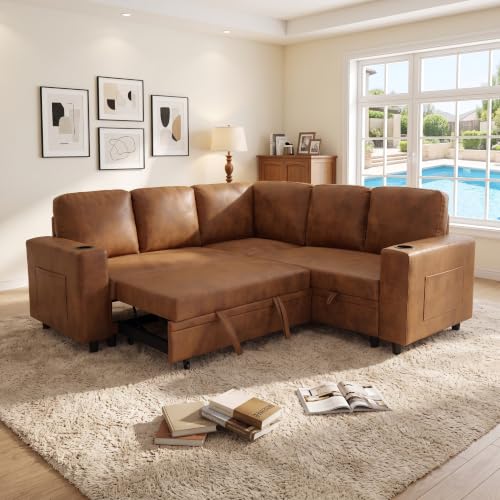
Eafurn L Shaped Sectional Sofa Bed with Pull Out Sleeper Couch Bed
Check price on Amazon
Naomi Home Laura 3-In-1 Sleeper Sectional Sofa, Black Air Leather | Pull-Out Bed, Hidden Storage Space, Reversible Chaise, Space-Saving Comfort, Guest-Ready Comfort, Perfect For Apartments
Check price on Amazon