
Engineered Wood Sleeper Sofas: Complete Buying Guide
Everything you need to know about engineered wood frames in sleeper sofas — construction methods, durability, cost, and how to choose the right one for your living room and guest room needs.
START EXPLORINGWhat Are Engineered Wood Sleeper Sofas?
Engineered wood sleeper sofas are convertible sofas built with a frame made from composite wood products rather than solid lumber. These frames are manufactured by binding wood fibers, particles, or veneers with adhesives under heat and pressure. The result is a stable, uniform material that can be shaped into the complex frame structures required for a sleeper sofa mechanism to function smoothly.
If you've shopped for a sleeper sofa recently, you've almost certainly encountered engineered wood frames — they're used in the vast majority of mid-range and budget-friendly pull-out sleeper sofas sold today. But what exactly goes into these frames, and are they a smart choice for your home? This guide breaks down everything you need to know before you buy.
The choice of frame material is one of the most important decisions in sleeper sofa construction because it directly affects how long your sofa will last, how much weight it can support, and how well the conversion mechanism will operate over time. A poorly constructed frame can cause sagging, squeaking, and even mechanism failure within a few years. A well-built engineered wood frame, on the other hand, can provide decades of reliable service.
For a broader overview of how different frame materials compare, see our guide to hardwood sleeper sofa frames and our comparison of metal frame sleeper sofas.
Types of Engineered Wood Frames
Not all engineered wood is created equal. The three main types used in sleeper sofa construction have very different performance characteristics:
1. Plywood Frames
Plywood is made by gluing together thin layers of wood veneer with the grain of each layer running perpendicular to the one below. This cross-grain construction gives plywood excellent dimensional stability and strength. In sleeper sofas, plywood is considered the premium engineered wood option. A high-quality plywood frame — typically 5/8 to 3/4 inch thick with multiple plies — can rival solid hardwood in durability and is far less prone to warping or cracking.
- Best for: Mid-range to high-end sleeper sofas where durability matters
- Thickness: Look for 5/8" to 3/4" thickness for load-bearing components
- Ply count: More plies generally mean greater strength and stability
2. MDF (Medium-Density Fiberboard) Frames
MDF is made from wood fibers broken down into a fine powder, combined with wax and resin, and pressed into dense panels. It has a very smooth, uniform surface and no grain, making it easy to shape and finish. However, MDF is heavier than plywood and can sag under sustained load if not properly supported. It also doesn't hold screws as well as plywood or solid wood, which can be a concern for the repeated stress of a pull-out mechanism.
- Best for: Decorative components and non-structural parts
- Concern: Can sag over time; screws may loosen with repeated use
- Weight: Heavier than plywood, making the sofa harder to move
3. Particle Board (Chipboard) Frames
Particle board is the least expensive engineered wood, made from wood chips and sawdust bound with adhesive. It's commonly found in budget furniture, including low-cost sleeper sofas. While it can be adequate for light-duty use, particle board is prone to crumbling if screws are removed and reinserted, swells if exposed to moisture, and has relatively poor structural strength. For a sleeper sofa — which experiences repeated mechanical stress from the conversion mechanism — particle board is generally a poor choice.
- Best for: Budget sofas with light, occasional use
- Concern: Poor screw-holding ability; moisture-sensitive; can crumble
- Lifespan: Typically 3–7 years with regular use
Recommended Engineered Wood Sleeper Sofas
⚠️ AFFILIATE DISCLOSURE: This website contains affiliate links. As an affiliate Associate, we earn from qualifying purchases. If you make a purchase through these links, we may receive a small commission at no additional cost to you. Read our full affiliate policy.

Topcomfy Convertible Futon Sofa Bed, Modern PU Leather Loveseat Couch Brown | Folding Sleeper Sofa with Pocket Spring & Solid Wood Legs, Leather Couch for Living Room, Apartment and Small Spaces

KEIKI 65" 3-in-1 Pull Out Sleeper Sofa Bed, Velvet Futon Loveseat with Adjustable Backrest, 2 Pillows and 500 lb Wood Frame for Guest Rooms, Overnight Guests, Apartments and Small Living Spaces
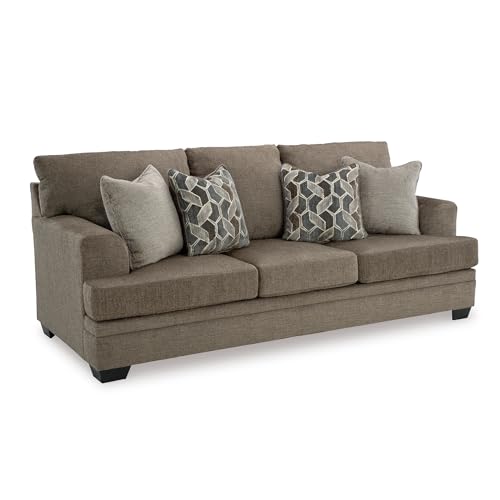
Signature Design by Ashley Queen Pull Out Sofa Bed, Nutmeg | Engineered wood, Wood and metal frame, Ultra-soft chenille fabric, 4-in memory foam mattress, Stonemeade Series

71" Grey 3-in-1 Queen Sofa Sleeper with Storage & Rev Chaise, Wooden Frame | Solid wood sofa bed, convertible to guest bed. Great for living rooms, apartments & offices. Also saves space in tiny rooms.

MALOL 65'' Convertible Futon Sofa Bed, 3-in-1 Pull Out Couch, Dark Grey | Fabric Loveseat Sleeper Sofa with Adjustable Backrest, Pillows, USB Port, Cup Holder, Foldable Table for Apartment Bedroom

Signature Design by Ashley Chatterton Queen Sleeper Sofa Couch, Granite | Faux leather, 4-inch queen memory foam mattress, Pull-out metal frame, Rustic rolled arms, Faux wood turned legs

Ottomanson Convertible Sofa Bed Futon Couch with Hidden Storage & Click-Clack Sit-Sleep Conversion – Wood Trim Arm Design, Firm Support Sleeper Sofa for Living Room, Apartment & Guest Room, Brown

KEIKI King Size Pull Out Sofa Bed 3 in 1 Classic Modern Convertible Sleeper Chenille Upholstery Nailhead, Rolled Arm Sturdy Metal Frame 600 lbs for Living Room Apartment Office Small Spaces, Green
Engineered Wood vs Hardwood Frames
The most common comparison shoppers make is between engineered wood and solid hardwood frames. Both have legitimate advantages, and the right choice depends on your budget, usage patterns, and expectations for longevity.
| Factor | Engineered Wood (Plywood) | Solid Hardwood |
|---|---|---|
| Durability | Good to very good; can last 10–20 years | Excellent; can last 25+ years |
| Cost | $400–$1,200 | $1,200–$3,500+ |
| Weight | Lighter; easier to move | Heavier; more difficult to move |
| Moisture Resistance | Moderate; plywood better than MDF/particle board | Poor to moderate; can warp if untreated |
| Warping/Cracking | Low (plywood); higher (MDF/particle board) | Moderate; can crack in dry climates |
| Screw Holding | Good (plywood); poor (particle board) | Excellent |
| Environmental Impact | Can use recycled materials; lower-grade wood | Higher resource use; depends on sourcing |
For most shoppers, a high-quality plywood engineered wood frame offers the best balance of price and performance. Solid hardwood is the gold standard, but the premium price is only worth it if you plan to keep the sofa for decades or use it daily as a primary bed. For a more detailed breakdown of wood joint construction, see our sleeper sofa wood joints guide, and to understand what "solid wood" claims really mean, read frame vs veneer sleeper sofa.
Engineered Wood vs Metal Frames
Metal frames are another popular alternative, particularly in modern and industrial-style industrial sleeper sofas and some futon sleeper sofas. Here's how engineered wood compares:
| Factor | Engineered Wood | Metal |
|---|---|---|
| Strength | Good; plywood strongest | Excellent; very high load capacity |
| Weight | Moderate | Heavy but slim profile |
| Squeaking | Can develop over time | Common; joints loosen |
| Aesthetic | Warm, traditional; easily upholstered | Modern, industrial; visible in some designs |
| Cost | $400–$1,200 | $350–$1,000 |
| Rust Risk | None | Present in humid environments |
| Repairability | Moderate; can reinforce wood | Moderate; can weld or tighten bolts |
Metal frames excel in strength and slim profiles, but they tend to squeak and can rust in humid climates. Engineered wood frames offer a warmer look, easier upholstery integration, and no rust concerns. For most living room settings, a plywood engineered wood frame provides the best combination of aesthetics and durability. To explore metal options, see our guide to metal frame sleeper sofas.
How Durable Are Engineered Wood Sleeper Sofas Really?
Durability depends almost entirely on the type and quality of engineered wood used. Here's what you can realistically expect:
Plywood Frames (High-Quality)
A well-constructed plywood frame with 5/8" to 3/4" thickness, properly glued and screwed joints, and adequate bracing can last 10 to 20 years with regular use. The conversion mechanism will typically wear out before the frame does. This makes plywood an excellent choice for guest rooms and living rooms where the sofa is used daily as seating and occasionally as a bed.
MDF Frames
MDF frames typically last 5 to 12 years depending on usage. The main failure points are screw holes stripping out and the material sagging under the weight of the mattress and sleepers. MDF performs best in low-traffic guest rooms where the sofa is used primarily for seating.
Particle Board Frames
Particle board frames are the least durable, often lasting only 3 to 7 years with regular use. The material can crumble around screws, swell if exposed to moisture, and may crack under the stress of the pull-out mechanism. These frames are best suited for very light, occasional use — think a spare room that's used a few times a year.
Proper care also extends lifespan significantly. Using a mattress protector and following our care and maintenance guidelines can add years to your sofa's life.
Pros and Cons of Engineered Wood Sleeper Sofas
✅ Pros
- More affordable than solid hardwood frames
- Lighter weight makes moving and rearranging easier
- Plywood offers excellent dimensional stability
- Uniform material with no natural defects
- Can be made from recycled or sustainable wood fibers
- Easily shaped for complex frame designs
- No risk of rust or corrosion
- Widely available across all price points
❌ Cons
- Lower-grade engineered wood (MDF, particle board) is prone to sagging and crumbling
- Particle board has poor screw-holding ability
- Can swell or warp if exposed to moisture
- Generally shorter lifespan than solid hardwood
- Some engineered wood products emit VOCs from adhesives
- Difficult to repair if structural components crack
- Heavier than expected with MDF construction
The pros and cons make it clear: engineered wood sleeper sofas can be an excellent value, provided you choose the right type. Plywood frames deliver most of the benefits with few of the drawbacks. Particle board frames, while inexpensive, are a false economy if you plan to use the sofa regularly.
Engineered Wood Sleeper Sofa Cost Guide
Prices for engineered wood sleeper sofas vary widely based on frame quality, upholstery, mattress type, and brand. Here's what you can expect to pay in today's market:
| Frame Type | Typical Price Range | Best For |
|---|---|---|
| Particle Board | $300–$600 | Occasional guest room use |
| MDF | $500–$900 | Light daily seating, occasional sleeping |
| Plywood (Standard) | $700–$1,200 | Regular daily use as sofa and bed |
| Plywood (Premium/Thick) | $1,000–$1,800 | Heavy daily use, primary guest bed |
Keep in mind that the frame is only part of the cost. Upholstery material, mattress quality, and mechanism type also significantly affect the price. A $700 sofa with a quality plywood frame and a good mechanism is a better investment than a $500 sofa with particle board and a flimsy mechanism. For more pricing context across all sleeper sofa types, see our affordable sleeper sofa picks and mid-range sleeper sofa picks.
Buying Tips for Engineered Wood Sleeper Sofas
Use this checklist to evaluate engineered wood sleeper sofas before you buy:
- Ask about the specific wood type. "Engineered wood" is a broad term. Ask whether the frame is plywood, MDF, or particle board. A reputable manufacturer or retailer will know.
- Check the thickness. For load-bearing frame components, look for plywood at least 5/8" thick. Thicker is better.
- Inspect the joints. Quality frames use glued and screwed joints, corner blocks, and reinforcement plates. Staples alone are a red flag. See our wood joints guide for details.
- Test the mechanism. If possible, operate the pull-out mechanism in the showroom. It should glide smoothly without excessive force or noise. Learn more in our mechanism guide.
- Consider the mattress. Engineered wood frames pair well with memory foam sleeper sofas and standard innerspring mattresses. A poor mattress will ruin the experience regardless of frame quality. See our mattress guide.
- Look for a warranty. A frame warranty of 5–10 years indicates the manufacturer's confidence in the product.
- Read the fine print on "solid wood" claims. Some sofas described as "solid wood" use engineered wood for internal components. Our frame vs veneer guide explains the difference.
- Check for certifications. Low-VOC or formaldehyde-free certifications (like CARB Phase 2 or TSCA Title VI) indicate safer adhesives.
- Measure your space. Use our sleeper sofa dimension chart to ensure the sofa fits both as a seat and as a bed.
- Avoid common mistakes. Our sleeper sofa buying mistakes guide covers pitfalls to avoid.
Care and Maintenance for Engineered Wood Frames
Proper care will help your engineered wood sleeper sofa last as long as possible:
- Control humidity. Engineered wood — especially MDF and particle board — is sensitive to moisture. Keep indoor humidity between 30% and 50% to prevent swelling and warping. Use a dehumidifier in damp climates. See our moisture protection guide.
- Clean spills immediately. Wipe up liquid spills on the upholstery and around the frame right away. Our liquid spill cleanup guide has step-by-step instructions.
- Avoid overloading. Respect the weight capacity of your sofa. Overloading the pull-out bed can stress the frame and mechanism.
- Lubricate the mechanism. A small amount of silicone spray or lithium grease on the metal mechanism parts (not the wood) keeps things running smoothly. See our mechanism repair guide.
- Protect against sun damage. Prolonged direct sunlight can dry out wood and fade upholstery. See our sun fade protection guide.
- Use felt pads. If your sofa has wooden legs, felt pads protect both the legs and your floors.
- Check for loose screws. Periodically tighten any visible screws in the frame and mechanism. Our screw types guide helps you identify what you need.
- Refresh the upholstery. Keep the fabric or leather clean and conditioned. See our upholstery cleaning guide and leather conditioning guide.
With proper care, a quality plywood engineered wood sleeper sofa can easily serve your household for 15 years or more. For a complete maintenance schedule, visit our care and maintenance hub.
Frequently Asked Questions
Are engineered wood sleeper sofas any good?
Yes — if the frame is made from quality plywood. Plywood engineered wood frames are strong, stable, and can last 10–20 years. However, sleeper sofas with particle board or low-grade MDF frames are significantly less durable and are best for light, occasional use only.
Is engineered wood better than solid wood for a sleeper sofa?
Not inherently better, but often better value. Solid hardwood frames are more durable and can last 25+ years, but they cost significantly more. A high-quality plywood frame offers 80–90% of the performance at 50–70% of the price, making it the sweet spot for most buyers.
How can I tell if a sleeper sofa has a plywood or particle board frame?
Ask the retailer or manufacturer directly. If buying in person, look underneath the sofa — plywood has visible layers (plies) on the edges, while particle board looks like compressed sawdust. MDF has a smooth, uniform, dense appearance. Online listings should specify the frame material; if they don't, contact the seller.
Do engineered wood sleeper sofas squeak?
They can develop squeaks over time, especially if joints loosen or the wood dries out. Regular tightening of screws and applying a small amount of wood-safe lubricant to joints can help. Squeaking is more common in lower-quality frames with stapled rather than screwed joints.
How long do engineered wood sleeper sofas last?
It depends on the type: particle board frames typically last 3–7 years, MDF frames 5–12 years, and quality plywood frames 10–20 years with proper care. The conversion mechanism often fails before the frame, so mechanism quality is just as important as frame material.
Are engineered wood sleeper sofas safe?
Yes, when manufactured to current standards. Look for frames certified to CARB Phase 2 or TSCA Title VI for low formaldehyde emissions. These certifications ensure the adhesives used meet strict safety standards. Well-ventilated rooms and allowing new furniture to off-gas for a few days after delivery further reduce any concerns.
What's the best mattress for an engineered wood sleeper sofa?
Memory foam and hybrid mattresses work well because they're lighter and more flexible than traditional innerspring mattresses, putting less stress on the frame and mechanism. See our sleeper sofa mattress guide and memory foam sleeper sofas for recommendations.
Ready to Choose Your Engineered Wood Sleeper Sofa?
You now have everything you need to make an informed decision. Focus on plywood frames for the best balance of durability and value, check the mechanism quality, and pair it with a comfortable mattress for a guest bed that will serve your home for years.
Start by browsing our recommended engineered wood sleeper sofas above, or explore our shopping and reviews hub for more guidance.
VIEW RECOMMENDED SOFAS