
Sleeper Sofa Starter Hub: Your First Step to Convertible Comfort
New to sleeper sofas? This hub walks you through everything you need to know—from choosing the right type and size to understanding materials, mechanisms, and setup essentials—so you can buy with confidence.
Welcome to SleeperSofaPro's Starter Hub. If you're researching your first sleeper sofa, you're in the right place. This page is designed as a guided learning path—each section builds on the last, taking you from complete beginner to confident buyer. Whether you're furnishing a guest room, a studio apartment, or a living room that doubles as a bedroom, understanding the fundamentals of sleeper sofa types will save you time, money, and frustration. By the end of this guide, you'll know exactly what to look for and how to avoid the most common buying mistakes.
Your 4-Step Learning Path
Follow this roadmap in order, or jump to the section you need most. Each step prepares you for the next decision in your sleeper sofa journey.
Understand the Types
Learn the five core mechanisms: pull-out, click-clack, futon, sectional, and fold-down.
Choose Your Size
Twin, full, queen, or king? Match the mattress size to your room and guest needs.
Pick Your Material
Fabric, leather, or performance upholstery? Understand durability and care requirements.
Plan Setup & Accessories
Placement, mattress toppers, bedding, and protection essentials for long-term comfort.
Step 1: Know Your Sleeper Sofa Types
The mechanism defines how your sofa converts and how comfortable it will be for sleeping. This is the single most important decision you'll make.
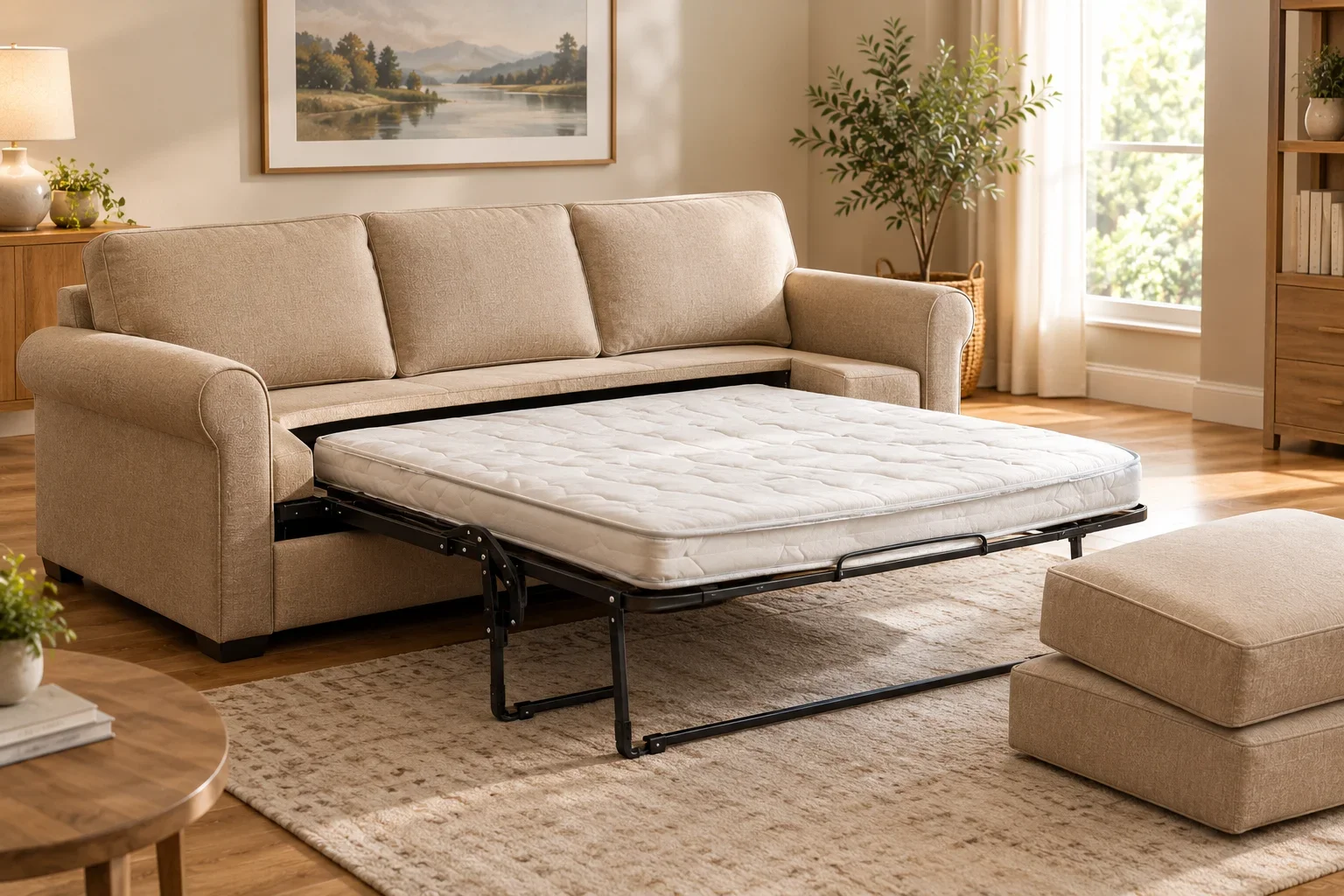
Pull-Out & Click-Clack: The Two Most Common Types
The pull-out sleeper sofa is the gold standard for guest comfort—it hides a real mattress inside the frame. If sleep quality is your priority, start here. The click-clack sleeper sofa is lighter, cheaper, and easier to operate, but it sleeps on its own cushions, which may not suit every guest.
For a complete breakdown of every mechanism—including futons, sectionals, and fold-down designs—visit our full guide on sleeper sofa types.
Step 2: Choose the Right Size
Size affects both seating comfort and sleeping capacity. Always measure your room before you buy.
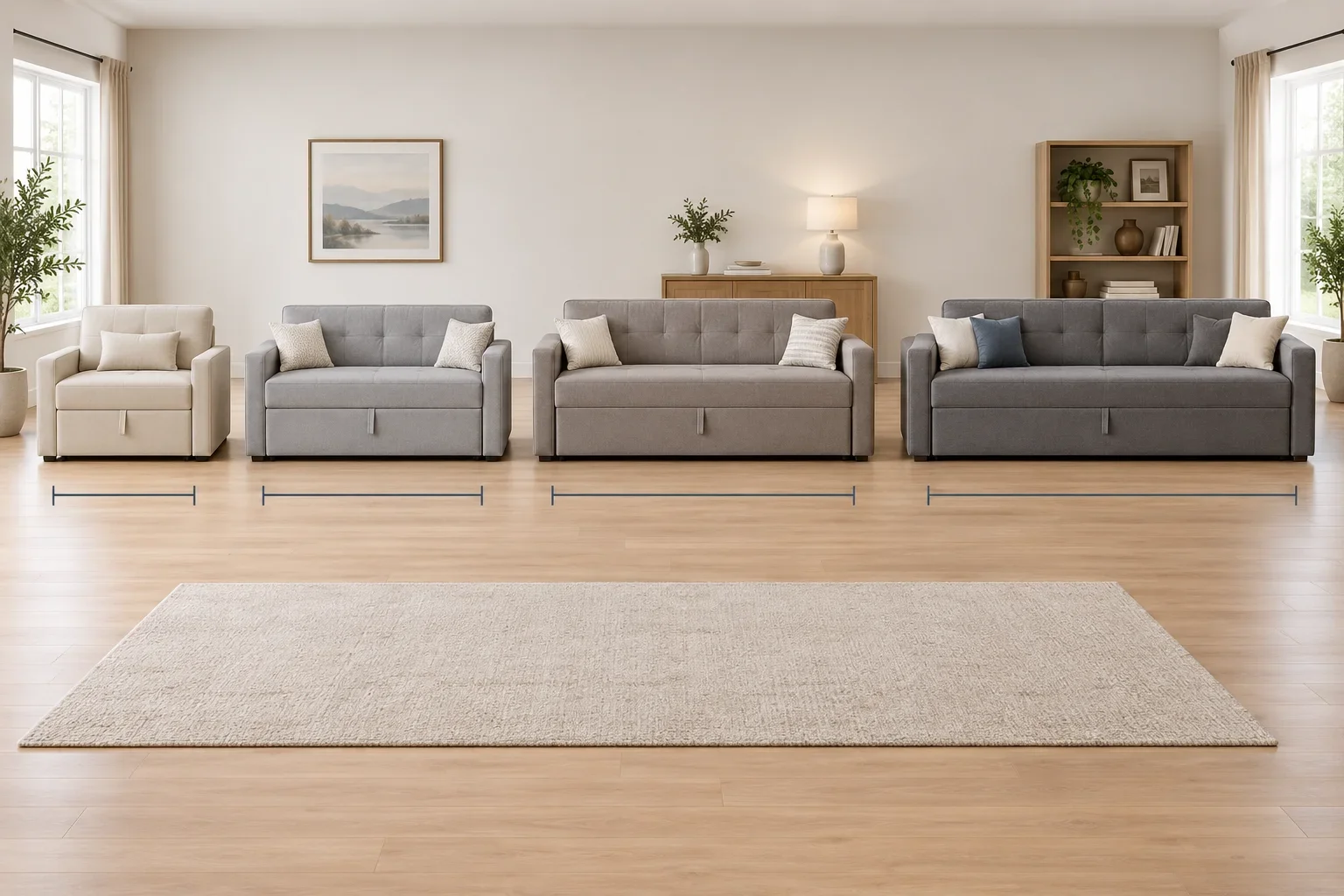
From Twin to King: Matching Size to Space
A twin sleeper sofa is perfect for kids' rooms or small apartments. A full sleeper sofa works well for single adults. The queen sleeper sofa is the most popular choice for couples, while a king sleeper sofa delivers maximum luxury for spacious guest rooms.
Don't forget to account for the extension space when the bed is open—check our dimension chart and placement guide before finalizing your choice.
Step 3: Pick the Right Material & Upholstery
Your fabric choice impacts durability, maintenance, and the overall look of your living room. Here's what beginners should know.
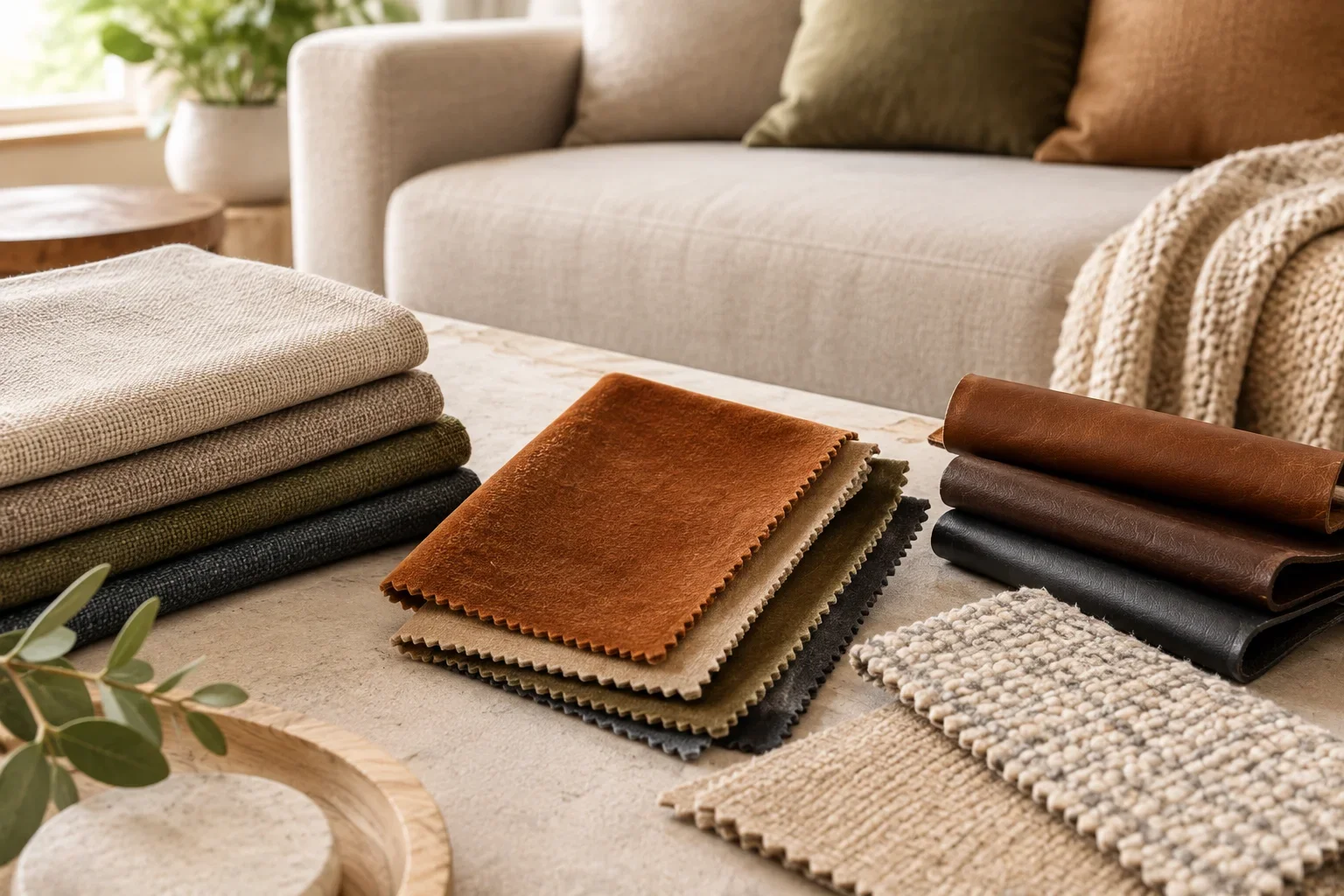
Fabric vs. Leather: Which Is Right for You?
Linen offers breathable, natural comfort but wrinkles easily. Velvet adds luxury but requires gentle care. Microfiber is stain-resistant and family-friendly. For a pet-free, low-maintenance option, consider leather sleeper sofas or faux leather.
Explore our full Material & Upholstery Hub to compare every option side by side, including bouclé and cotton.
Step 4: Plan Your Setup & Accessories
A great sleeper sofa experience goes beyond the sofa itself. These essentials make a real difference in comfort and longevity.
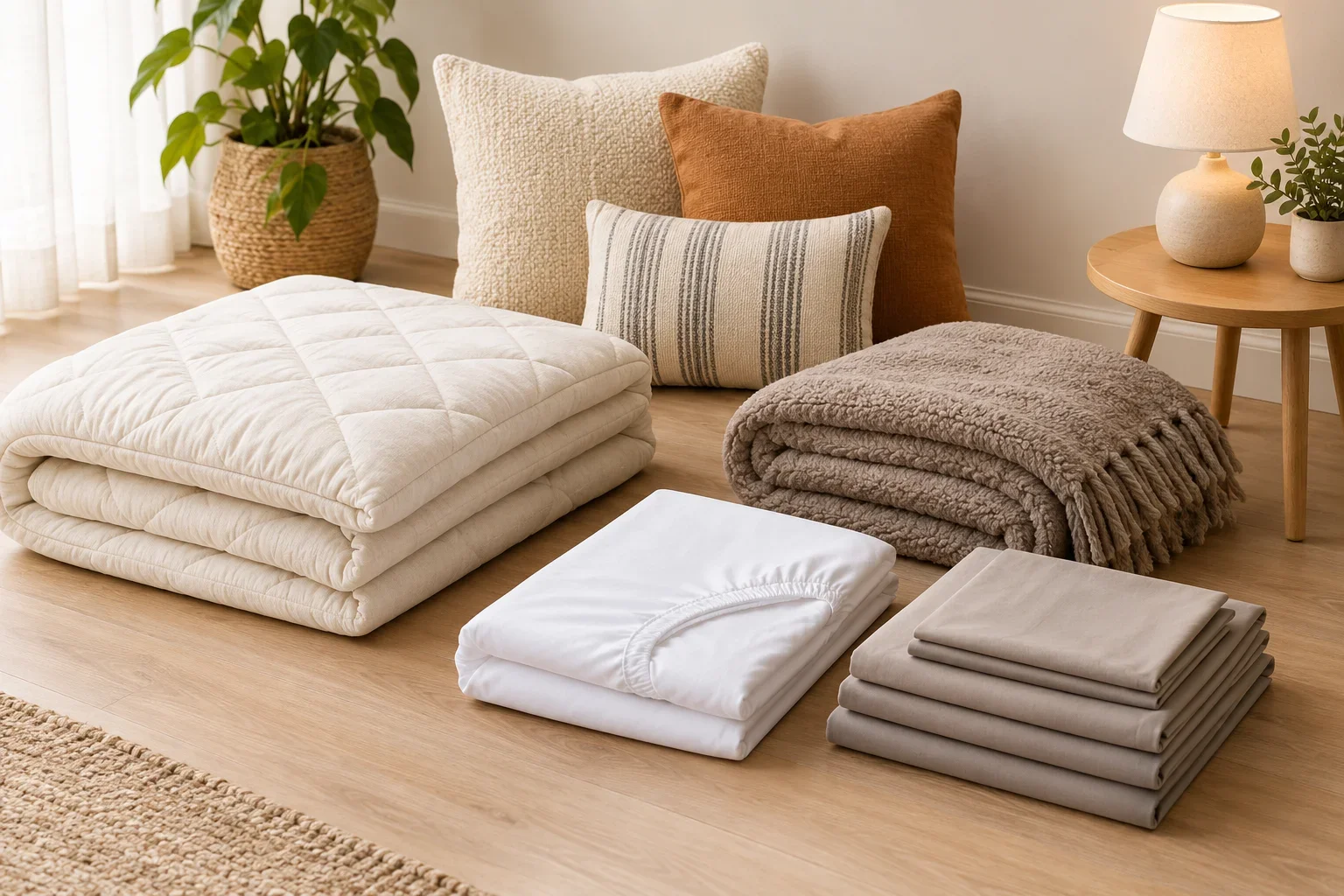
Essential Accessories for First-Time Buyers
Start with a mattress topper—it's the single easiest upgrade for guest comfort. Add mattress protectors to guard against spills, and choose the right sheets for a snug fit. For styling, throw pillows and blankets make the sofa feel like home.
If you're assembling the sofa yourself, our assembly guide covers tools, safety, and step-by-step instructions. Browse our full Setup & Accessories hub for more.
The First-Time Buyer's Checklist
Before you click "buy," run through this checklist to make sure you've covered every critical decision.
- Measured your room, including doorways and stairs for delivery
- Decided on a mechanism type (pull-out, click-clack, etc.)
- Chosen a mattress size that fits your guest needs
- Selected an upholstery material that matches your lifestyle
- Confirmed the frame material (hardwood is best for durability)
- Budgeted for accessories like a mattress topper and protector
- Checked the warranty and return policy
- Read reviews from verified buyers on the specific model
Quick Links for New Buyers
Jump straight to the topics you need most. These are our most popular beginner-friendly resources.
First Sofa Checklist
Don't miss a step
Buying Mistakes
Avoid costly errors
Spec Glossary
Decode the jargon
Dimension Chart
Measure with confidence
Recommended Sleeper Sofas for Beginners
⚠️ AFFILIATE DISCLOSURE: This website contains affiliate links. As an affiliate Associate, we earn from qualifying purchases. If you make a purchase through these links, we may receive a small commission at no additional cost to you. Read our full affiliate policy.

Marsail Futon Sleeper Sofa Bed, Convertible Pull Out Couch, Light Gray | 3-in-1 Sleeper Couch with USB Charging & Side Pockets, Adjustable Backrest, Velvet Fabric Sofa for Living Room, Apartment
Check price on Amazon
HONBAY Modular Sectional Sleeper Sofa with Pull Out Bed, L Shaped Couch with Storage Seat, Modular Sectional Couches for Living Room - Beige
Check price on Amazon
78" 5-in-1 Convertible Futon Sofa Bed, Boneless Couch for Living Room | Thick Corduroy Boneless Sofa Bed, 4-Bracket Frame, Storage Pocket, Modular, No Assembly for Guest Room or Apartment|Dark Gray
Check price on Amazon
78" 5-in-1 Convertible Futon Sofa Bed, Boneless Corduroy, Green | 5-in-1 Modular Sleeper Sofa for Living Room, Guest Room or Apartment, Fixed-Shape Frame, Corduroy Covers, No Assembly
Check price on Amazon
63" Convertible Sofa Bed Loveseat Sleeper Sofa with Pull Out Couch Bed | Swivel Side Table Hidden Storage Space USB & Type-C Charging Ports Cup Holders Futon Sofa Bed for Small Spaces Living Room
Check price on Amazon
KEIKI 65" 3-in-1 Pull Out Sleeper Sofa Bed, Velvet Futon Loveseat with Adjustable Backrest, 2 Pillows and 500 lb Wood Frame for Guest Rooms, Overnight Guests, Apartments and Small Living Spaces
Check price on Amazon
Actinidia 60" Sleeper Sofa Bed, Chenille Pull Out Couch with Side Table & USB Charging Ports, Modern Loveseat Sofa with 5-Position Reclining Backrest for Small Spaces, Black
Check price on Amazon
Sofa Bed Pull Out 2 in 1 Sectional Sleeper Sofa L Shaped Couch with Storage | Convertible Sofa Couches for Living Room, USB Charging Ports, Cup Holder (Dark Gray)
Check price on AmazonFrequently Asked Questions for First-Time Buyers
Start with a click-clack sleeper sofa or a futon—both are affordable, easy to operate, and work well for occasional guests. Expect to spend $400–$1,200. If you can stretch your budget, a pull-out sofa with a quality mattress ($800–$1,500) delivers much better sleep comfort for frequent visitors.
Measure three things: the sofa's dimensions when closed, the extension space needed when open, and the path to get it into your room (doorways, hallways, stairs). Our dimension chart and placement guide walk you through the process step by step.
Yes, especially for pull-out models. Most built-in sleeper sofa mattresses are thinner than standard mattresses. A mattress topper adds 2–3 inches of cushioning and dramatically improves guest comfort for around $60–$150.
Hardwood frames (kiln-dried oak, maple, or birch) are the most durable and can last 10–15 years with proper care. Engineered wood is a budget-friendly alternative, while metal frames offer strength for heavy-use mechanisms. Avoid particle board or veneer-only frames.
A quality sleeper sofa with a hardwood frame and high-density foam cushions typically lasts 7–15 years. The mechanism and mattress are usually the first components to wear out. Regular maintenance—covered in our Care & Maintenance hub—can extend its lifespan significantly.
Secondhand can be a great way to save money, but inspect the mechanism carefully and check for odors, stains, or sagging. Our secondhand buying guide covers what to look for. If the mechanism is damaged, repairs can cost more than the sofa is worth—see our mechanism repair guide for context.
Ready to Find Your Perfect Sleeper Sofa?
You've covered the fundamentals—now it's time to explore specific models and compare prices. Browse our curated picks or dive deeper into the topics that matter most to you.